G-School
Seoul, South Korea
Skipping diplomas.
Shipping apps.
Students
Coaches
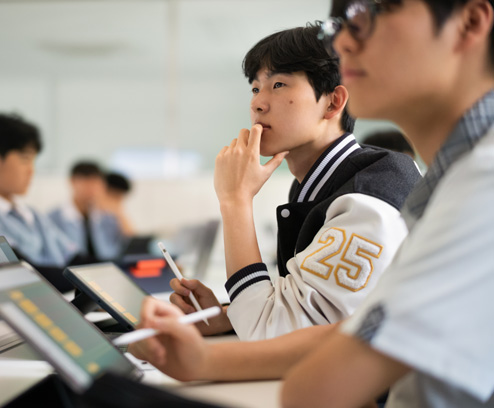
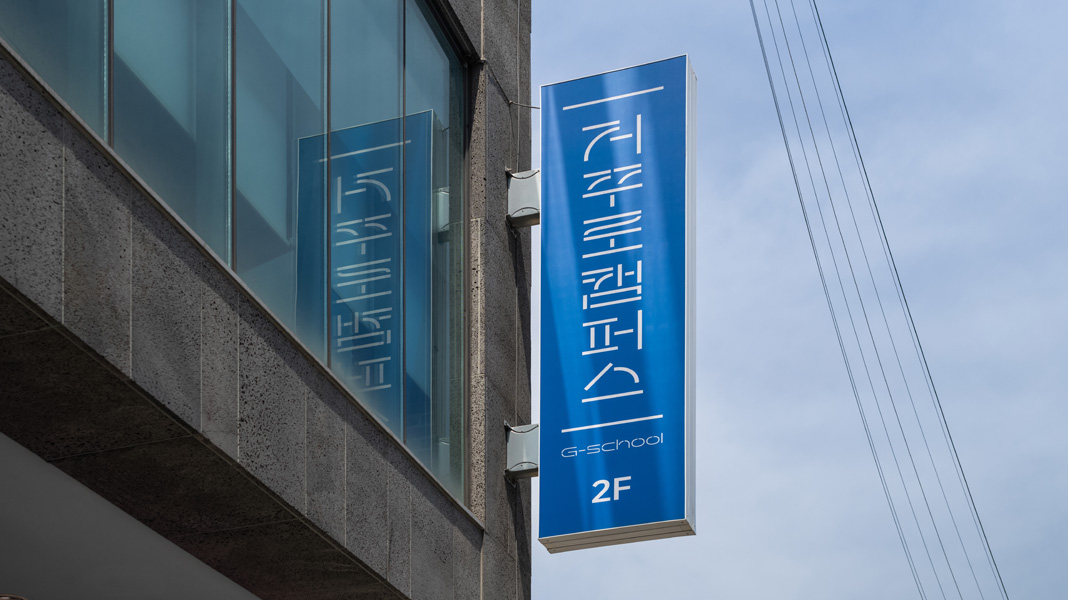
Located in Seoul on a quiet street, on the second floor of a high-rise, G-School looks more like a startup than a high school. It doesn’t operate like a high school, either. In South Korea, where academic achievement is often measured in test scores and university placements, G-School questions the nature of education, including grades, exams, lectures, and diplomas. “We kept only what was truly needed,” says Principal Jungbaeck Lee.
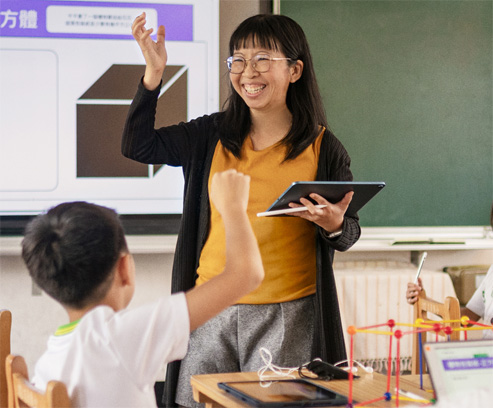
Founded in 2017 out of South Korea’s flipped-classroom movement, G-School challenges traditional education. Instead of teachers, it employs “coaches.” Instead of lectures, classes focus on hands-on projects, collaboration, and building solutions to social issues that are aligned with UN Sustainable Development Goals. Students earn a portfolio instead of a diploma — graduating when they demonstrate workplace readiness.
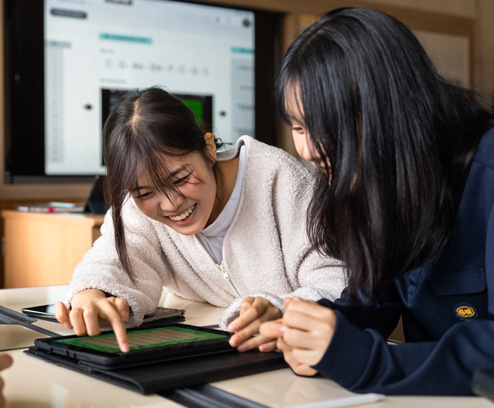
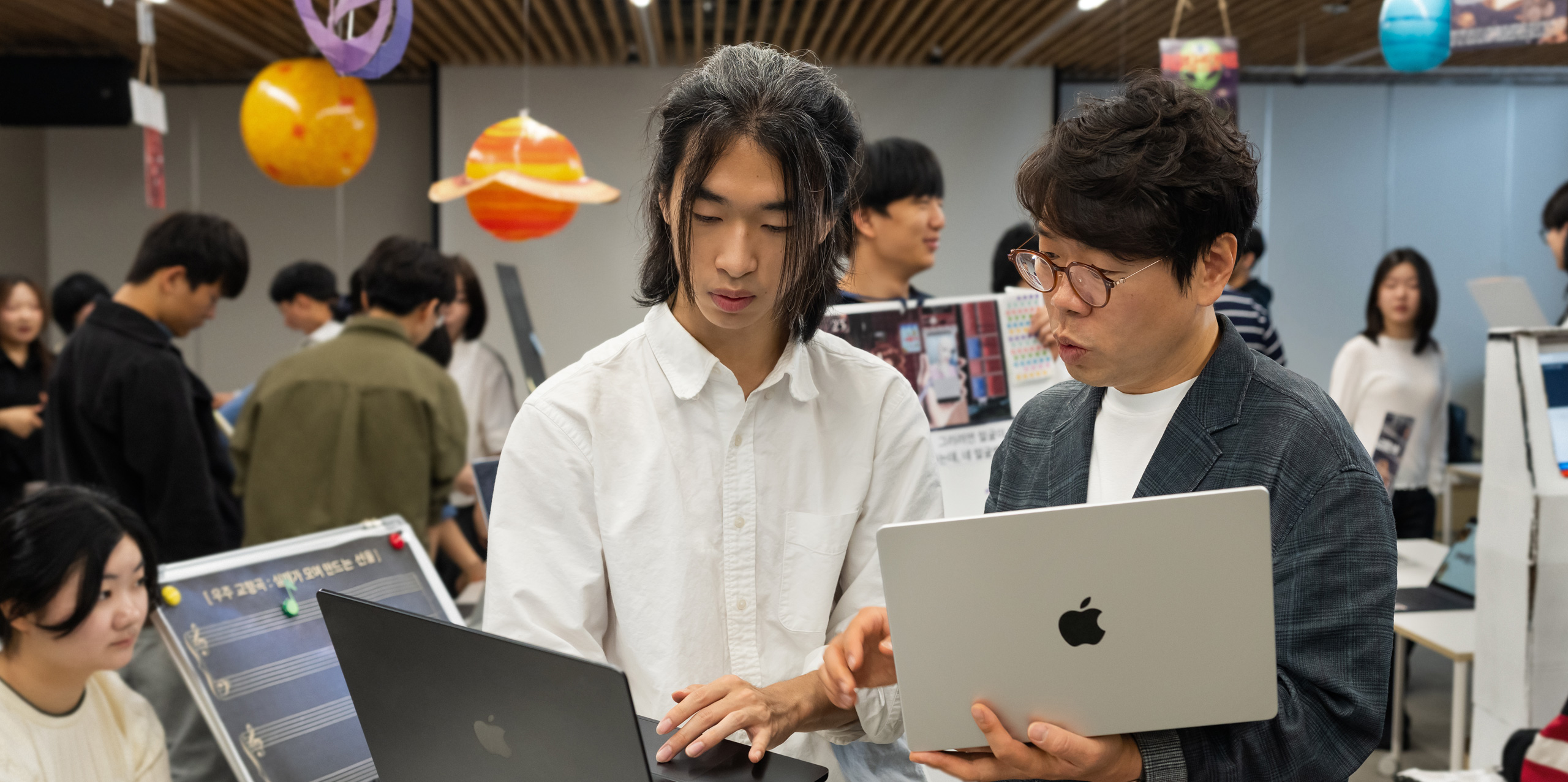
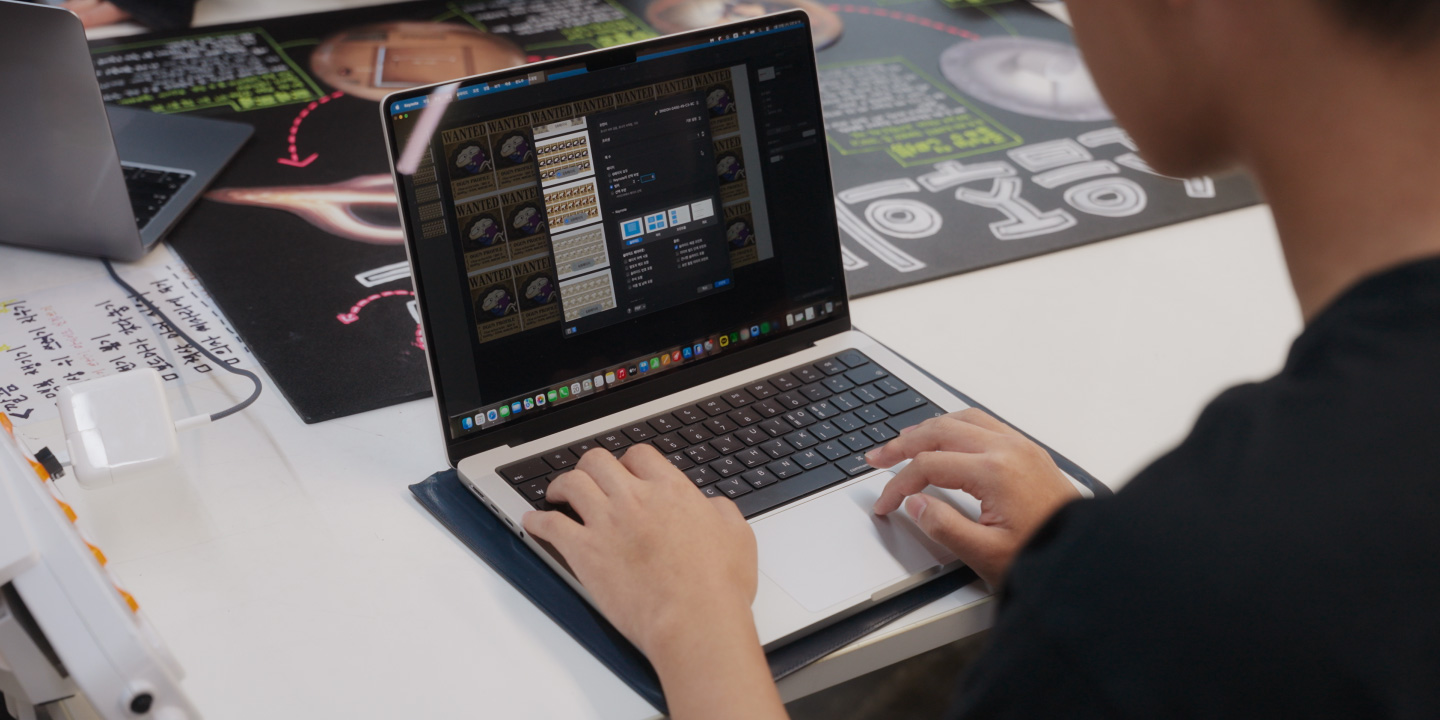
Classrooms with names like “Dreaming” and “Growing” are equipped with Apple TV, whiteboard tables, musical instruments, soldering irons, 3D printers, and more. Every student owns a MacBook that contains every project they’ve built. Principal Lee calls it their “second brain.” When they graduate, they take it with them into their next venture. It reflects how he thinks technology should work. “Good technology is the kind you don’t notice using,” he says. “It shouldn’t call attention to itself — it should disappear into the learning and amplify it.”
In their first year, students take a foundational class called CoreLab, which explores questions around pedagogy, artificial intelligence, and humanity’s role in social change. In their second year, they move into AlphaLab, developing hands-on skills across design, marketing, coding, writing, and AI application. By their third year, students work independently to identify a problem and build a solution for it.
CoreLab is where that connected way of thinking takes root. Its classes are interdisciplinary by design — spanning Korean, English, math, science, and social studies — and coaches build and share the materials for every subject in Numbers. Because a student’s whole year of learning accumulates on one canvas, connecting an idea from one subject to the next — and combining them into something new — becomes the natural next step. The approach is already traveling beyond G-School: six of Korea’s textbook publishers, representing 78% of the market, are now building textbooks in Numbers.
Here, classes are not in silos anymore. Students think, ‘I learned this in history — how can I use it in math?’ And vice versa.
In coach Bongkeun Lee’s Korean Language class, students take moments from history and retell them as allegories. One student created a narrative between a mackerel and a crow, generated illustrations with AI, put it all together in Pages, and published the finished project as an ebook.
Students also push the boundaries in AI Product Lab, which is guided by a single principle: humans spark the ideas before AI enters the discussion. “Students define a problem and think for themselves first. Only then do we use AI — as a colleague,” says coach Jiyoung Choi.
-
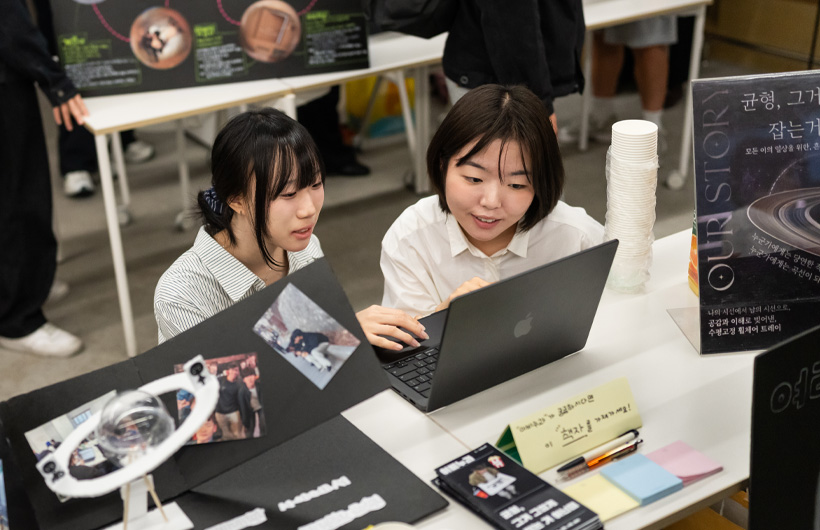
Students start with a real problem — often one they’ve faced themselves — and set out to build something that solves it. -
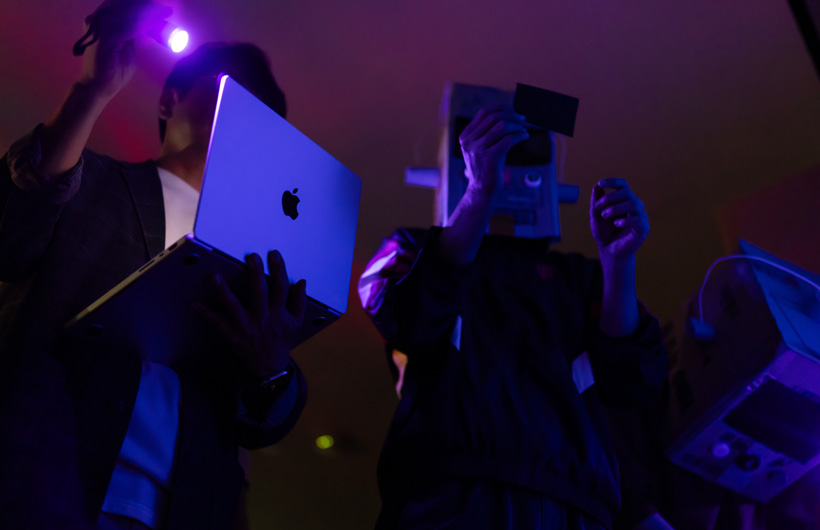
They design, build, and experiment on Mac, turning ideas into things they can test. -
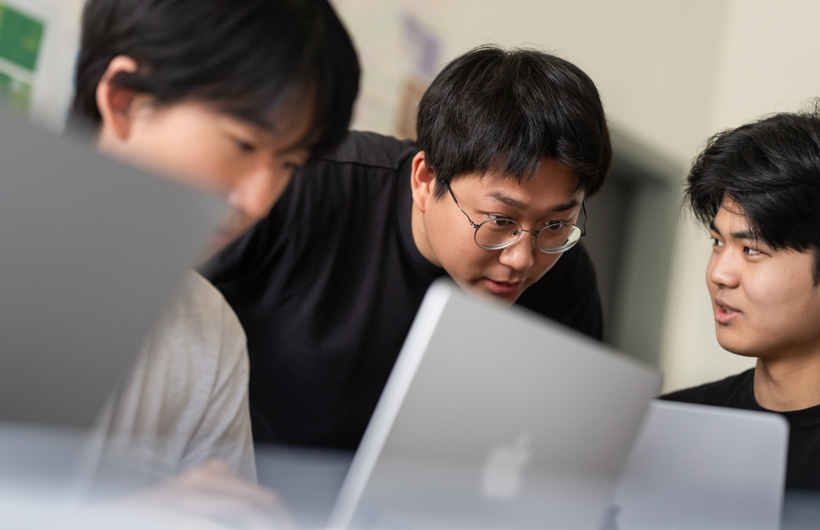
Coaches build out every subject in Numbers, so a year of learning lives on one canvas — and students carry ideas from one class into the next. -
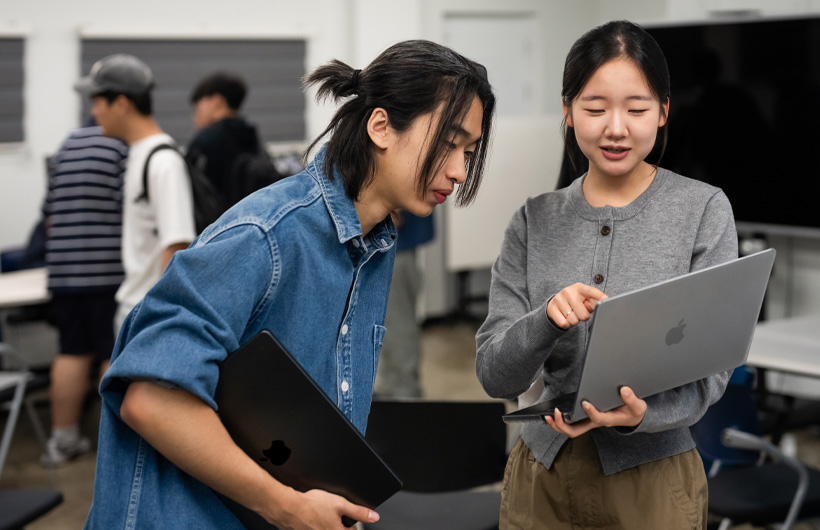
The best projects reach real people — apps that ship, products that get picked up, and ideas that spread to other schools.
One team took that principle all the way to the App Store. Searching for a problem they’d lived themselves, they kept landing on a small, universal one: the expired medicine that collects in a home cabinet. Their app, Phillio, scans a medicine box to catalog what’s inside, sends an alert when something expires, and uses AI to flag risky interactions between medications. “I wasn’t solving someone else’s problem,” says team lead Hajun Song. “When I realized this was a problem I had too, I stopped thinking of it as a class assignment. Whether it worked or not, I had to try.”
They built it on Mac and shipped it — and the students still maintain it today, even after graduation. The moment it became real arrived without warning: while staffing a booth at a school showcase, the team watched a stranger walk up and say, “I use this app — wait, students made this?” They still talk about the goosebumps.
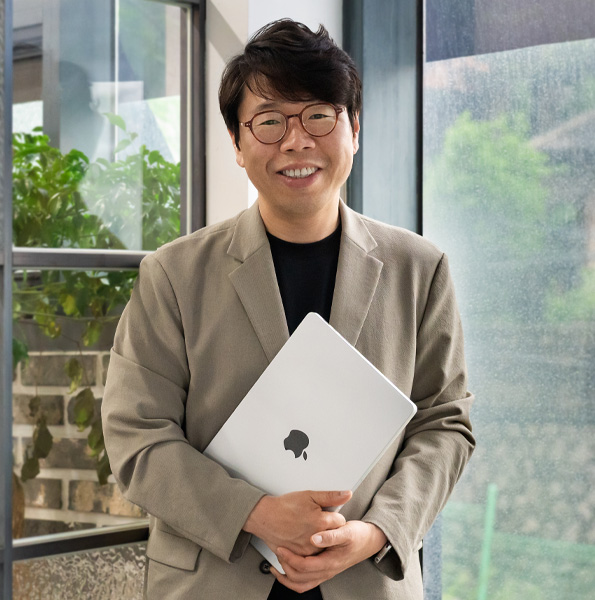
A Mac in a student’s hands shortens the distance between a problem you face yourself and a product strangers actually use — to a matter of months.
Jungbaeck Lee
Principal, G-School
Phillio isn’t the only product that has reached beyond the classroom. Another team tackled a barrier hiding in plain sight — wheelchair users kept out of neighborhood shops by the step at the door. They canvassed local businesses to connect owners with an overlooked public ramp subsidy program and partnered with a disability welfare center to get ramps installed.
CookSteps, a cooking instruction app for the visually impaired, was acquired in 2025, and GEN IT’s AI Survival Backpack, an analog kit for teaching AI without screens, won the Youth Impact Competition and a place in the Korean government’s Pre-Startup Package.
Word has spread. In 2025 alone, over 500 educators visited to see how a school without grades or exams produces such graduates. And when the Incheon Office of Education opened a future-model school within its public system, G-School was tapped to provide the training and curriculum. Coach Choi still remembers her first day on the job. “My colleague and I both looked at each other and said: This is the future.”