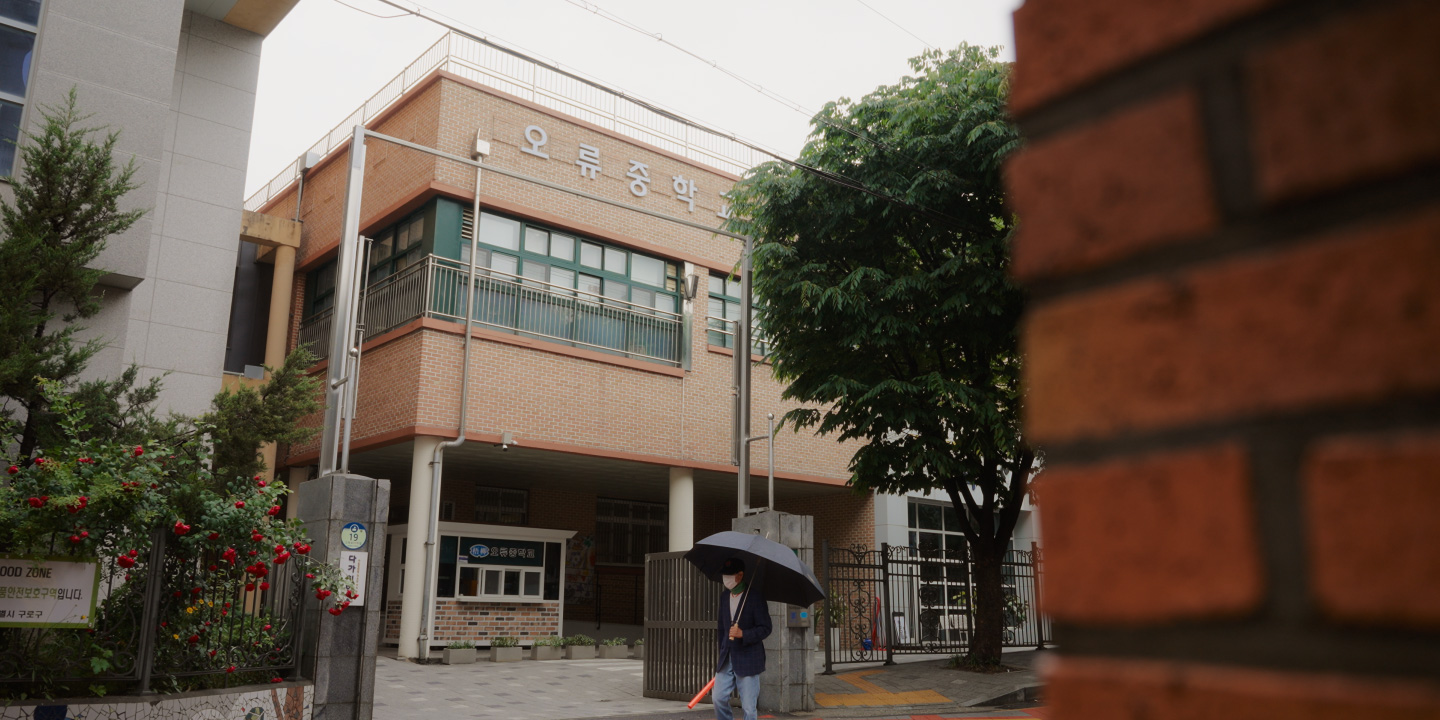
Oryu Middle School
Seoul, South Korea
Making every student’s voice count.
Students
Educators
Oryu Middle School wasn’t always known for educational innovation. It sits on the western edge of Seoul in Guro-gu, a hard-working, modest neighborhood that was once home to factories that manufactured garments, electronics, and other exports during South Korea’s industrial rise.
For years, families who had the resources often sent their children to schools elsewhere. But in 2012, Oryu got the chance to transform itself when the Seoul Office of Education designated it an Innovation Future School, giving it resources to pilot new approaches to learning.
The reinvention also brought new devices. When asked to choose among several options, the school took the task to heart, giving teachers several months to test them in classrooms. What they found was that the other devices were gradually set aside, while teachers with iPad kept finding creative ways to build lessons and engage students. The answer was clear.

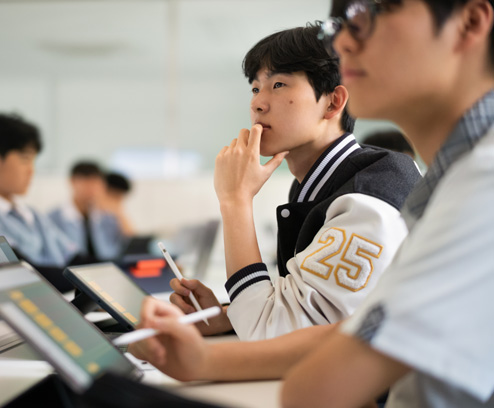
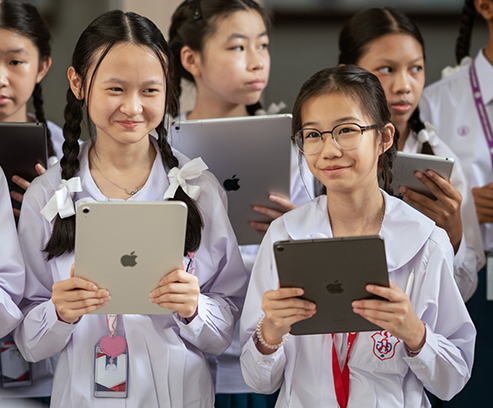
Today, the school has more iPad devices than students — with extras available to borrow for home use. Everyone receives an iPad, Apple Pencil, and a keyboard case at no cost, and every classroom has an Apple TV.
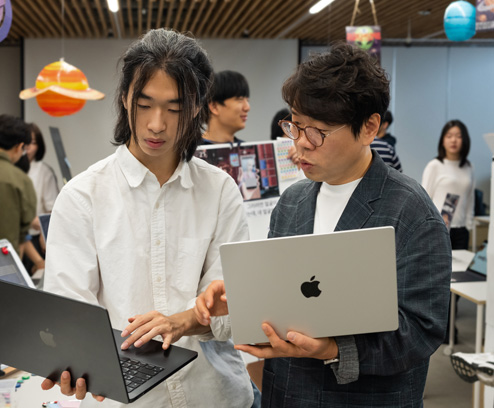
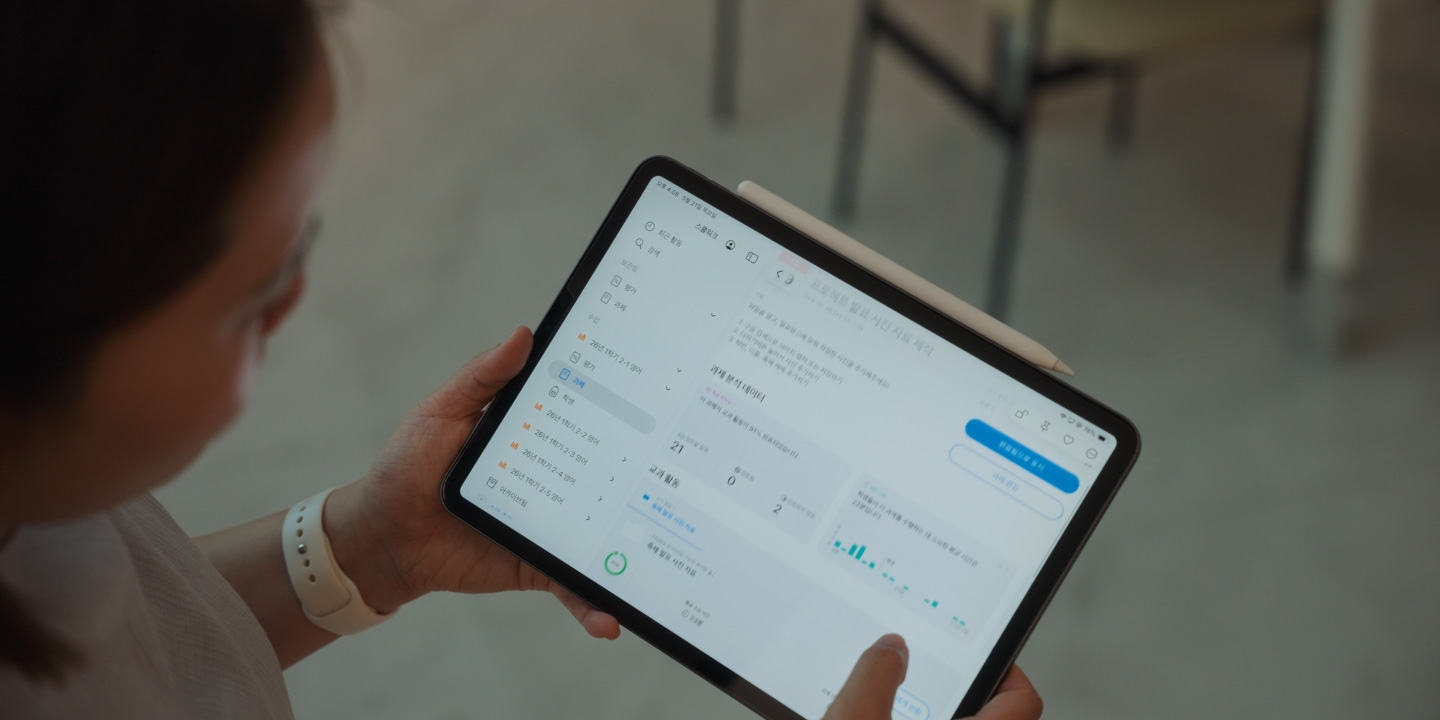
Jaeyeong Moon, a Korean Language teacher and an Apple Professional Learning Specialist, relies on iPad to unlock connection with every student. In the Numbers app, teachers create a tab for every lesson, where they can track student work over time and provide guidance, corrections, and encouragement when needed.
Students can work anywhere, anytime, and I can see their process and give feedback in real time. This changed my teaching.
Moon compiles each student’s work into a Pages portfolio to visualize their personal progress. And iPad lets him move seamlessly between Apple’s teaching apps, like Schoolwork and Classroom, without giving up tools like Microsoft Teams. Everything he needs is in one place.
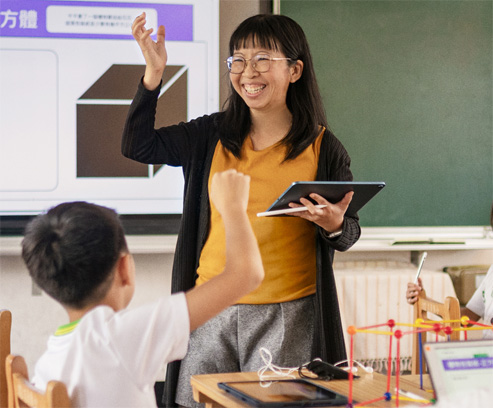
More visibility also helps teachers notice students who might go unnoticed. “In English classes, the fast and confident students always answer first, which limits the time for everyone else. With iPad and the right apps, I can see every student’s thinking process at once and give every student a chance to respond,” says English teacher Eunju Lee.
Equity isn’t just a classroom principle — it shapes how the school governs itself. “When there’s a motion before the student body, every student stays in class and deliberates and votes on iPad. It’s a tool for participation that transcends time and space,” says Principal Jungku Kang. This way, every student has a say.
-
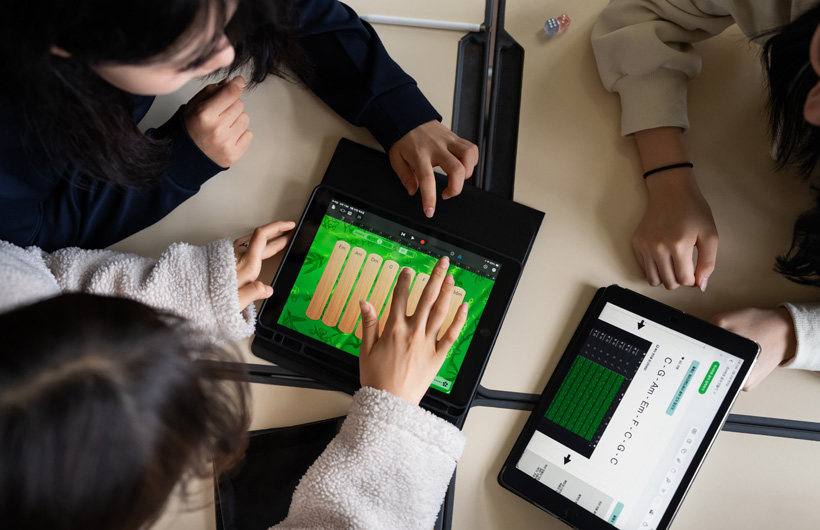
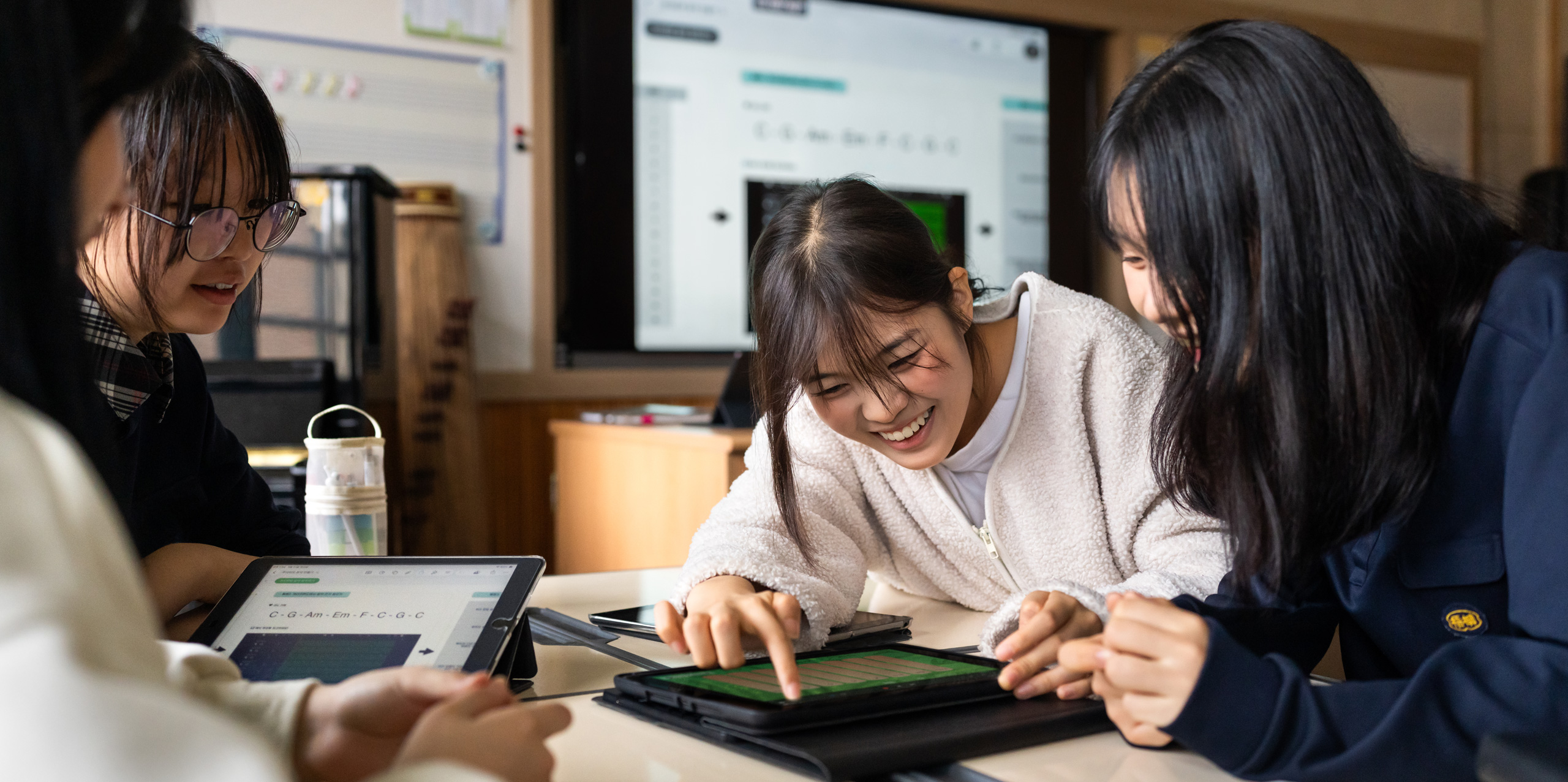
In classrooms across the school, students write poems, compose songs, sketch drawings, and more — all on iPad. -

From everyday class discussions to school-wide votes, every student makes their voice heard. -
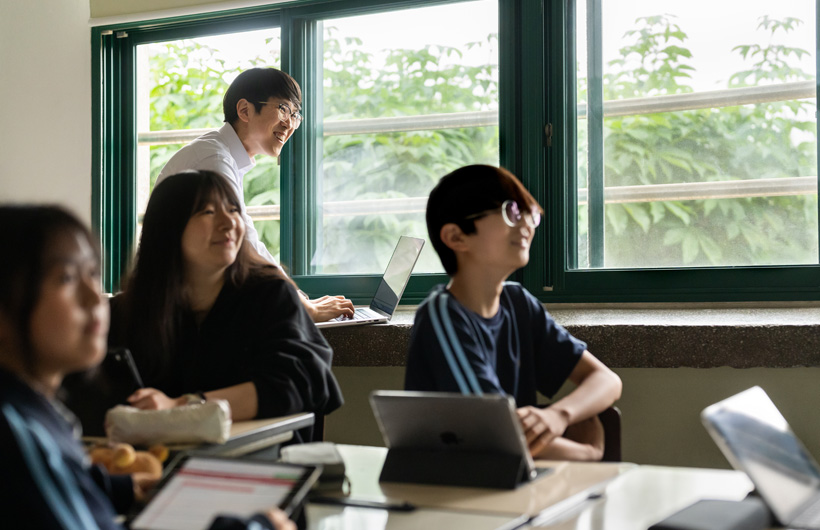
With every student’s work visible and trackable on Pages, teachers can reach those who might be less noticed otherwise. -
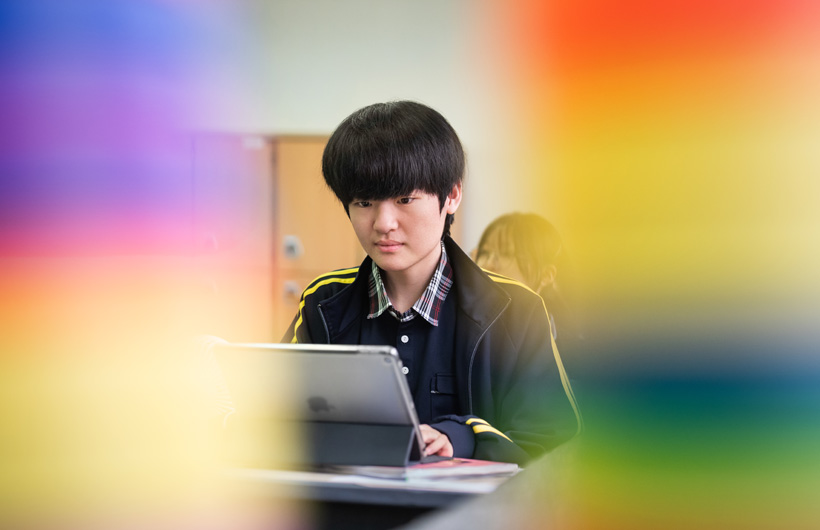
Each student builds a personal archive of their work to look back on and grow from — year over year.
Oryu’s curriculum also spans subject matter. One annual project combines what students learn across classes: they write original poems in Korean Language class, compose them into songs in GarageBand during Music class, then upload them as audio files paired with QR codes. The poems and codes go up on the wall as posters where visitors can scan and experience each student’s original work. When students from other grades saw the exhibition, they demanded their own.
By the school’s own measures, students’ competency scores — spanning knowledge comprehension, creative thinking, and portfolio work — rose from 3.57 to 4.07 on a five-point scale in the 18 months after the rollout, a 14% gain. In a neighborhood that spent generations building things for the world, Oryu Middle School is building a new legacy of young adults who are confident, creative, and ambitious.
Parents tell me, ‘Thank you. My child is excited to go to school in the morning.’ Those small accumulated wins are how we earn a community’s trust.